01
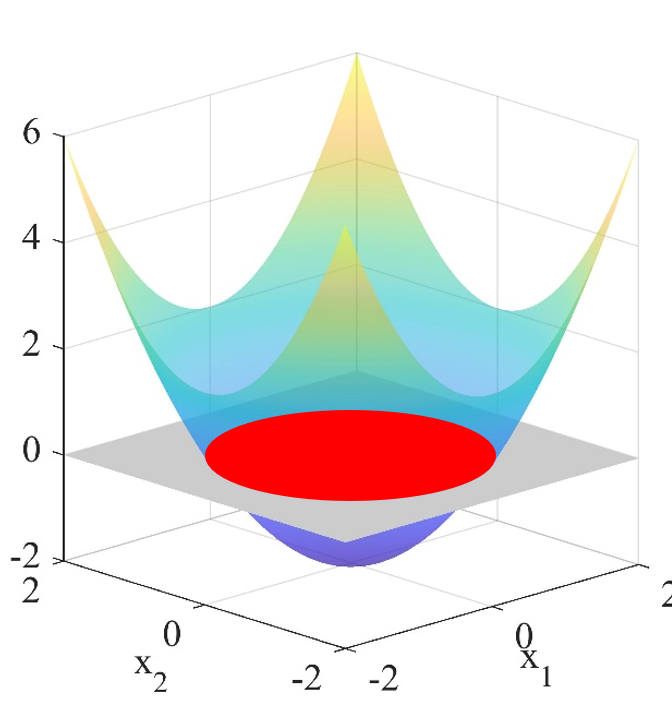
Learning-based optimal control
Performance and safety guarantees for control with learned or uncertain models.
Delft Center for Systems and Control
Assistant Professor · TU Delft
I work at the intersection of system identification, optimal control, and artificial intelligence with applications to human motion, biomechanics, and robotics
My group develops both fundamental theory and practical methods for the automation of intelligent systems. Based on our core in control theory, we take a mathematical approach to integrate generative models, reinforcement learning, and physics-model-based approaches for challenging modeling and control problems. Our goal is to simultaneously achieve intelligent control and rigorous guarantees for safety and performance
01
Performance and safety guarantees for control with learned or uncertain models.
02
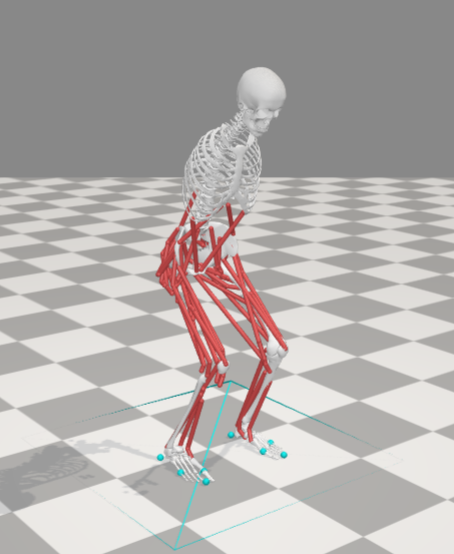
Human motion digital twins, musculoskeletal systems, and tendon-driven robots.
03
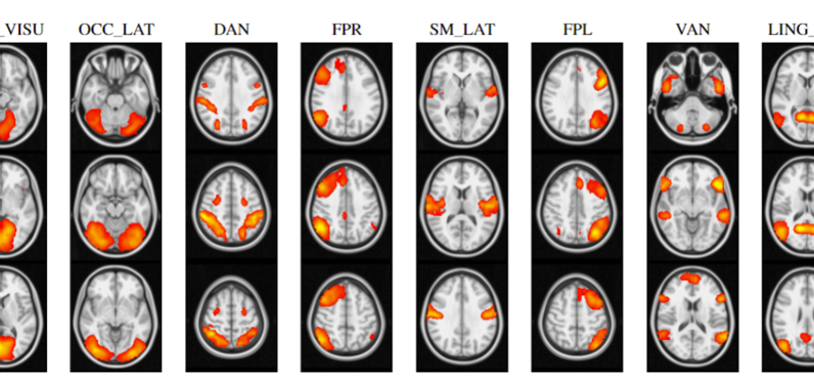
Data-driven modeling and identification of interconnected dynamical systems.
Master student Qijun Feng graduated from my group, congratulations! His thesis is about incorporating physics constraints into diffusion model for human motion generation.
Two bachelor research groups successfully defended their thesis projects on robotic-hand control and human motion digital twins.
We presented preliminary results on human motion digital twins at the Benelux Meeting on Systems and Control.
DCSC launched a monthly online seminar series. The spring speakers were Leilei Cui, Sungho Shin, Dinesh Krishnamoorthy, and Lars Lindemann. DCSC recordings
Congratulations to Kanghui He on successfully defending his PhD thesis on safe and computationally efficient learning-based control!
Changrui Liu's work on the regret of MPC with imperfect inputs was featured at CDC 2025 in Brazil. Paper
Our paper on state-action control barrier functions appeared online in IEEE Transactions on Automatic Control. Paper
Shengling attended IROS 2025 in Hangzhou, China.
Our preprint on bang-ride optimal control and fast battery charging is available on arXiv. Preprint
Our paper on the suboptimality of receding horizon quadratic control appeared online in IEEE Transactions on Automatic Control. Paper
Kelvin Toonen joined the group as a PhD student, working on learning and control for human digital twins.
Shengling joined TU Delft as an Assistant Professor.
Shengling joined MIT as a postdoctoral associate, working on optimal control for large-scale nonlinear systems.
IEEE Transactions on Automatic Control, 71(7), 4649–4664, 2026.
IEEE Transactions on Automatic Control, 71(5), 3365–3371, 2026.
IEEE Transactions on Automatic Control, 71(3), 1422–1437, 2026.
I am an Assistant Professor at the Delft Center for Systems and Control, TU Delft. Before joining the faculty, I was a postdoctoral associate at MIT and a postdoctoral researcher at TU Delft. I received my PhD in 2021, advised by Prof. Paul M. J. van den Hof, and my MSc with distinction in 2017, both from the Control Systems Group at Eindhoven University of Technology. During my master's studies, I completed a research internship at ETH Zurich. I obtained my bachelor's degree from Harbin Institute of Technology. I have served as an associate editor for the IFAC World Congress and the IFAC Symposium on System Identification. I am also a member of the IFAC Technical Committee on Modelling, Identification and Signal Processing.